Film or coating: what is each one protecting against?
Paint protection film and ceramic coating get lumped together, but they stop different things. Film is a physical layer laid over the paint, so a stone chip, a road scuff or a door-edge scrape meets the film first. A ceramic coating is a hard, glossy surface bonded to the clear coat, which is why water beads on it and dirt lets go more easily. Exceptional Detailing installs both at the bay in Clearwater, and some vehicles suit film on the front end with a coating over the rest.
Color-change PPF carries the same idea into a new color: the film protects the paint and changes how it looks at the same time. The shop's Instagram bio lists it right beside ceramic coatings and paint correction, and that order makes sense on the vehicle too, because film locks in whatever sits under it. Swirls, wash marring and haze get corrected first, then the film goes over paint that is worth keeping. Call (727) 235-4379 with the vehicle and what you want it to survive, and the answer on film, coating or both comes out of that call.
Color-change PPF or vinyl wrap?
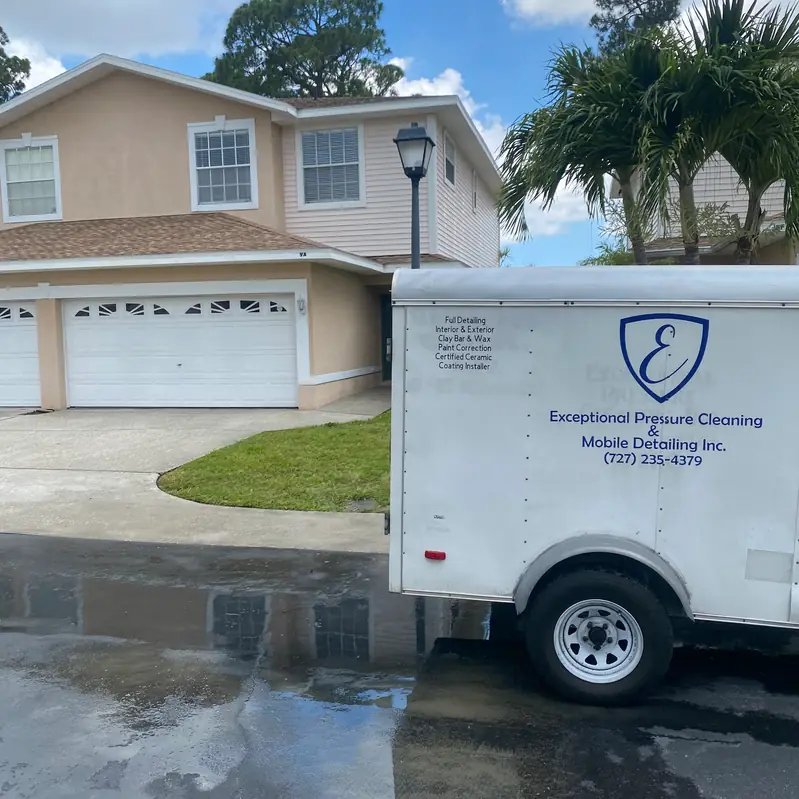
A vinyl wrap is the quicker route to a different color. Sheets of colored vinyl are stretched and trimmed panel by panel, with seams tucked into the body lines wherever the shape of the vehicle allows. The company trailer is the example parked in plain sight: it wears its own vinyl wrap, a blue shield emblem and the service list on white, and the van beside it is lettered Ceramic Coatings. Vinyl changes how the vehicle looks, but it does not add the impact resistance that a film does.
Color-change PPF is the choice when you want the color and the protection in one layer, since the film covers the paint as well as recoloring it. Neither option is a respray, and both sit on top of whatever paint is already there, so a vehicle with failing clear coat or deep scratches is a conversation before it is an install. Bring it to the bay and the paint gets looked at under the hex lights, the same grid a clear coat is judged under.
Motorcycles are part of this too. The shop details bikes as well as cars, and a tank, fender or fairing takes the same stone strikes a hood does, over a much smaller area. Work is quoted per vehicle, so a Harley-Davidson tourer and a full-size pickup are each priced as what they are. Say which panels matter most to you when you call, so the quote covers the tank and fenders you care about instead of guessing at the whole machine.
How is a film or wrap install prepared and kept up?
Prep decides how an install looks once it is on the road. The vehicle is washed, decontaminated and clayed so nothing is trapped between paint and film, then wiped down panel by panel so the adhesive meets bare clear coat instead of wax or oil. Installs belong indoors: the bay at 14605 49th Street North, Unit 14, has a roll-up door for the vehicle, black walls, and light even enough to show a stray hair or a lifted edge before it is sealed under film.
Aftercare is mostly restraint. Wash by hand instead of a brush tunnel, use a soft mitt, keep a pressure wand well back from edges and seams, and skip wax and harsh chemicals unless the installer says the material allows them. Ask for the care notes for the exact film or vinyl put on your vehicle, since materials differ. The shop is licensed, insured and IDA certified, so the person who did the install is also the person to call with a question afterwards.