Paint Correction Before Ceramic Coating: Why the Order Matters
A coating locks in whatever is under it, so the paint has to be right before anything goes on.
October 17, 2026 · 4 min read
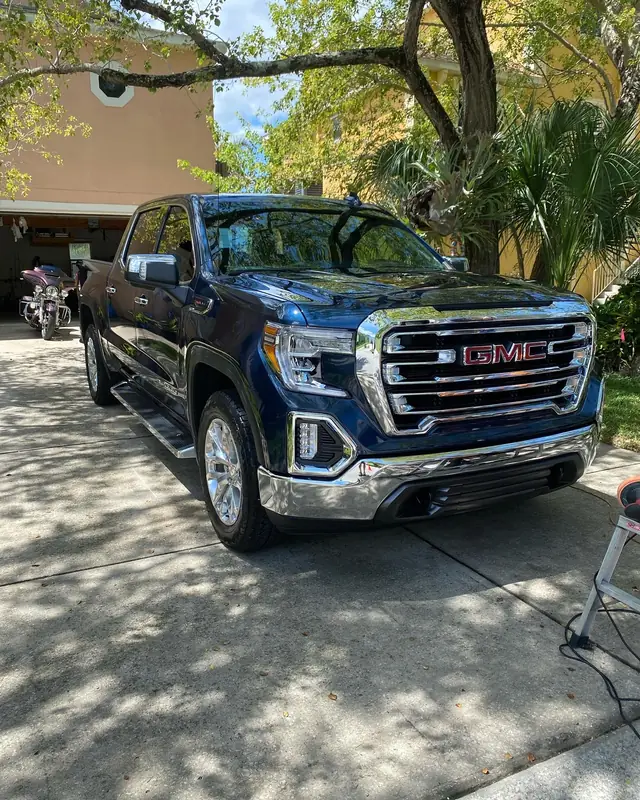
If you are thinking about a ceramic coating for your truck, SUV or daily driver, the first question we ask at Exceptional Detailing in Clearwater is not which coating. It is what the paint looks like right now. The order of the work matters more than almost anything else in the job, and it is the part customers hear about least.
Here is the short version. A coating seals in whatever is under it. Healthy, smooth paint stays healthy and gets easier to keep clean. Swirled, hazy or etched paint stays swirled, hazy and etched, only now with a glossy layer on top that makes the flaws easier to see, not harder.
What a ceramic coating does and does not do
A ceramic coating is a liquid that gets wiped onto the clear coat and left to cure. As it cures it forms a thin, hard layer bonded to the surface. That layer makes the paint slicker, so water beads and rolls off, dirt rinses away more easily, and the finish looks deeper. What it does not do is repair anything. It is not a filler. It will not erase a scratch, and it will not lift a water spot that has already eaten into the clear coat.
That is why the coating is the last step of a good job, not the first. It can only bond to a clean, bare surface, and it can only copy the shape of the surface it lands on. Put it on rough paint and you get rough paint with a shine.
Why swirls and haze get locked in
Most paint on the road around Tampa Bay carries fine scratches, even on fairly new cars. They come from automatic washes with worn brushes, dry wiping a dusty panel, a towel that touched the ground and got used anyway, and a gritty sponge on a Saturday morning. In direct sun they show up as a web of circles around the headlights. In the shade the paint just looks a little tired.
Add Florida to that. Sprinkler water leaves mineral spots, and if they bake in the heat they can etch into the clear coat. Bird droppings do the same thing faster. Lovebug remains harden onto the hood. None of it is obvious on a dirty car, and all of it jumps out the moment the paint is clean and glossy.
If a coating goes over those defects, the only way to remove them later is to polish through the coating itself, which defeats the reason you paid for it. Correct first, coat second.
What paint correction involves
Paint correction is machine polishing with abrasives matched to your paint. A pad and compound remove a very thin amount of clear coat, enough to level the surface down to the bottom of a scratch, so the scratch is gone rather than hidden. Light swirls may come out in one pass. Deeper marks may need a more aggressive step first and a finer one after it to bring back full gloss.
Some defects go further than polish can safely reach, like heavy orange peel or a deep run in a repaint. For those, wet sanding can level the surface before polishing. It is slower and takes judgment, because every pass removes clear coat that cannot be put back. The goal is the best finish the paint can safely give, not the most aggressive cut. That is why we look at the panels under proper light before deciding how far to go.
The prep between polishing and coating
After polishing, the paint is covered in oils and compound residue. A coating needs a clean surface to grab, so the car gets washed again, decontaminated with a clay bar to pull out bonded grit, and wiped down panel by panel with a solution that strips leftover oils. Only then does the coating go on. This prep is quiet work. You will not see it in the finished photo, but it is the difference between a coating that bonds evenly and one that wears off in patches.
What if your paint is already in good shape?
Not every car needs heavy correction. A newer vehicle that lives in a garage and gets washed carefully may need only a light polish and a thorough clean before coating. A truck with years of automatic washes and parking lot sun will need more. We look at the car in person and tell you what the paint actually needs. The answer is sometimes less than you feared and sometimes more than you hoped.
Questions worth asking any shop before you book
- Will the paint be corrected before the coating goes on, and how will you check it under light?
- How do you prep the panels after polishing so the coating can bond?
- Where does the coating cure: indoors, or out in the weather?
- How should I wash the car afterward, and what should I stay away from?
The answers tell you quickly whether a shop treats the coating as a product to apply or as the last step in a process. One customer wrote on Google that we completed “2 paint correction and ceramic coating jobs for me on separate specialty cars. The cars look phenomenal.” That pairing, correction and then coating, is how we like to work.
If you want to know what your paint needs, call Exceptional Detailing at (727) 235-4379. You can read how we handle the polishing step at /services/paint-correction and the coating step at /services/ceramic-coating. We are at 14605 49th Street North, Unit 14, in Clearwater, and we work with drivers in Clearwater, St. Pete and Tampa.
Exceptional Detailing Inc, (727) 235-4379
Call (727) 235-4379More articles
Lovebugs, Sun and Salt Air: Protecting Paint in Clearwater
Gulf Coast paint takes a different kind of beating. Here is what each hazard does and what to do about it.
How to Wash a Ceramic Coated Car at Home Without Undoing It
The coating does half the work. Your wash habits decide whether it keeps working.